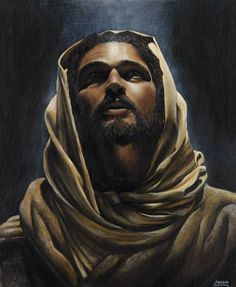
“Who Do You Say That I Am?” is a broad question, due to the fact that every individual has their own view on Christ, himself. What I gained from the two readings, Christ as Ancestor and Elder Brother and Christology and an African Woman’s Experience, is that the presence of Christ continues to manifest in every situation of an individual’s life, particularly the life of an African Christian. Africa, known for its beautiful land, people and culture, also consists of social challenges, like poverty, strife, hunger, diseases (Ebola, Malaria HIV/AIDS), and oppression of women rights. If I dealt with or experienced any of these tribulations, I would doubt the existence of heaven and even God. Desolation (1 of the 7 D’s of the Spiritual Life). Feeling God’s absence coupled with a sense of hopelessness – NOT felt by the six women in the prayer group. In Nasimiyu-Wasike’s excerpt, which provides a recording of a women’s prayer group in Sub-Saharan Africa reflecting on who is Jesus to them, it states, “Their main struggles are against the forces which rob them of control over their destiny and which do not enable them to fulfill their God-given potential” (71). By placing emphasis on their daily struggles as a woman in a patriarchal society, Jesus is simply their backbone. A source for empowerment where the presence of Christ fulfills points to their new reality, hope and future.
African Christology places a pedestal on the Ancestors: The Supreme Being. Christ is the ancestor. We rely on our ancestors to guide us through this life, as they have been placed on this earth before we came into existence. I was intrigued with the Bantu’s vision of Jesus ascending to a position of a meditator after his resurrection, between God and their human descendant. It is like we are constantly united with our savior when we look to him for direction.
 Daniel's Perspective On Christianity
excellent personal and analytical reflection that places the readings in the context of our whole semester. VERY WELL DONE.
LikeLike